
What Are the Steps for Manufacturing Embossing Steel Rollers?
Published: 2019-01-16 09:12:53
The ten standardized process steps for manufacturing embossing steel rollers are listed below:
1. Material Preparation: The roller barrel adopts seamless steel pipe; the roller shaft is made of 45# round steel; end plates use Q235 steel plate. All raw materials are cut according to drawing dimensions with an 8 mm machining allowance reserved.
2. Turning Machining: Machine the fitting surfaces of the roller barrel, end plates, roller shaft and other parts to reach H9/f9 fit tolerance.
3. Welding & Assembly: Weld internal stiffeners, double-end shafts and other accessories. Calibrate coaxiality between the two end shafts and the inner sleeve. Only the inner end plates are welded onto the shafts in this step.
4. Fit the fully welded inner sleeve into the roller barrel, then weld the matching joints between inner end plates and the roller barrel.
5. Install outer end plates on both ends of the roller shaft, then weld the connecting surfaces of outer end plates, roller shafts and roller barrel.
6. Carry out annealing treatment on the welded roller blank for internal stress relief.
7. Face off one end surface of the roller shaft and drill standard center holes.
8. Turning Process: Complete rough turning and finish turning for all sections of the roller barrel to meet drawing requirements. The surface roughness of the roller working surface shall be ≤1.6μm. The allowable radial runout of the roller working surface relative to the two shaft supporting surfaces (rolling bearing installation positions) is 0.025 mm; the roundness tolerance of the roller working surface is 0.036 mm; bearing fitting journals are machined to k6 tolerance. Afterwards, install the steady rest to machine end faces and drill holes to specified sizes.
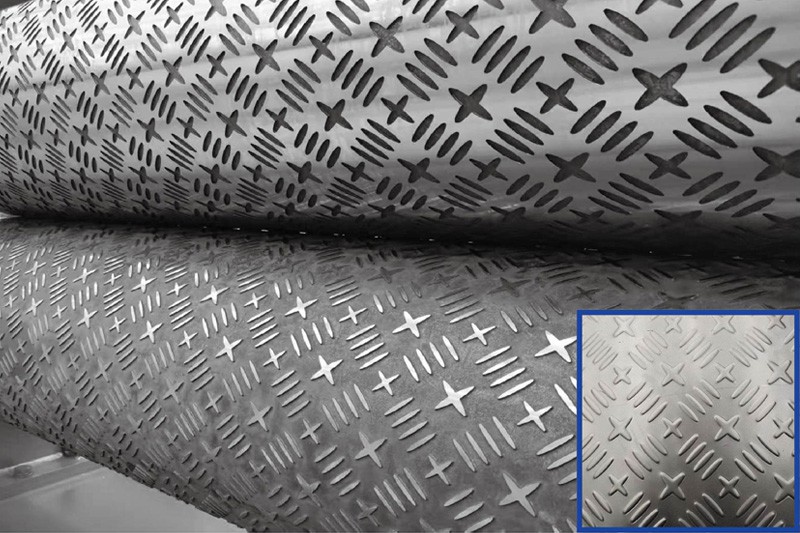
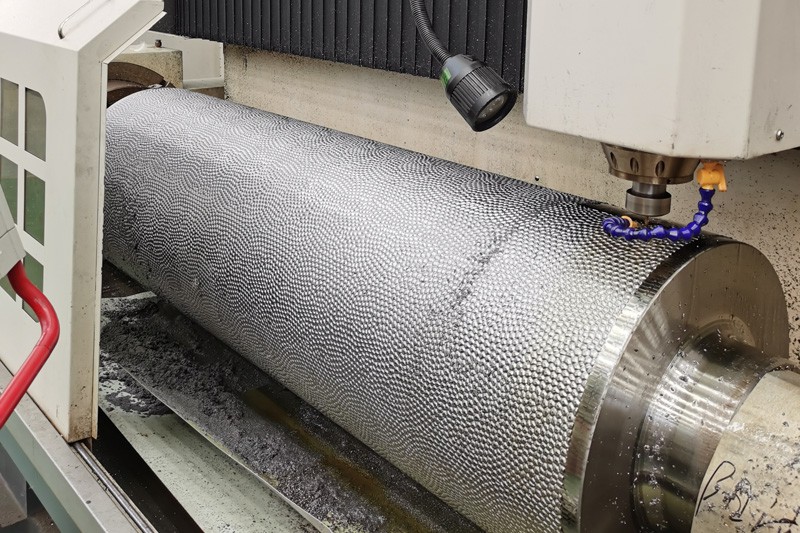
9. Conduct pattern machining in accordance with pattern design requirements of the steel roller, followed by hard chrome electroplating with coating thickness controlled at 0.03–0.05 mm.
10. Perform static balance calibration for the finished steel roller.